Set a measurable baseline
Start with the field’s intended use and the conditions it must survive. A venue hosting professional games, batting practice, concerts and community sessions has a different recovery problem from a field with long closures. Record the turf species, rootzone construction, shade pattern and event calendar before prescribing a routine. Kentucky bluegrass, perennial ryegrass, tall fescue and hybrid bermudagrass differ in growth habits and seasonal response; they are not interchangeable maintenance systems.
Walk the same inspection route and compare equivalent locations. Note cover, rooting depth, leaf condition, divoting and moisture. Include bullpen approaches, outfielder starting positions and access gates rather than only the visually prominent center field. A photograph is useful when its location and conditions are recorded; an isolated image of green grass says little about surface resilience.
Separate symptoms from causes
Discoloration is a starting point, not a diagnosis. Examine leaves and crowns, pull a small profile sample where appropriate, and compare the affected area with nearby healthy turf. Check whether roots occupy the available profile or stop abruptly at a layer. Ask whether the problem follows irrigation coverage, machinery passes, shade, a recent treatment or concentrated traffic.
Dry soil, saturated soil, heat stress, disease and mechanical injury can produce overlapping symptoms. Where disease is suspected, a qualified diagnostic laboratory can help identify the problem before treatment. The University of Massachusetts Extension Turf Program and Penn State Extension provide useful educational material, but a general symptom description cannot confirm the cause on your field.
Diagnostic row: the same patch wilts every afternoon
Compare moisture at several depths, irrigation distribution, rooting and nearby shade. A shallow root system may explain repeated wilting even when the total irrigation volume appears sufficient.
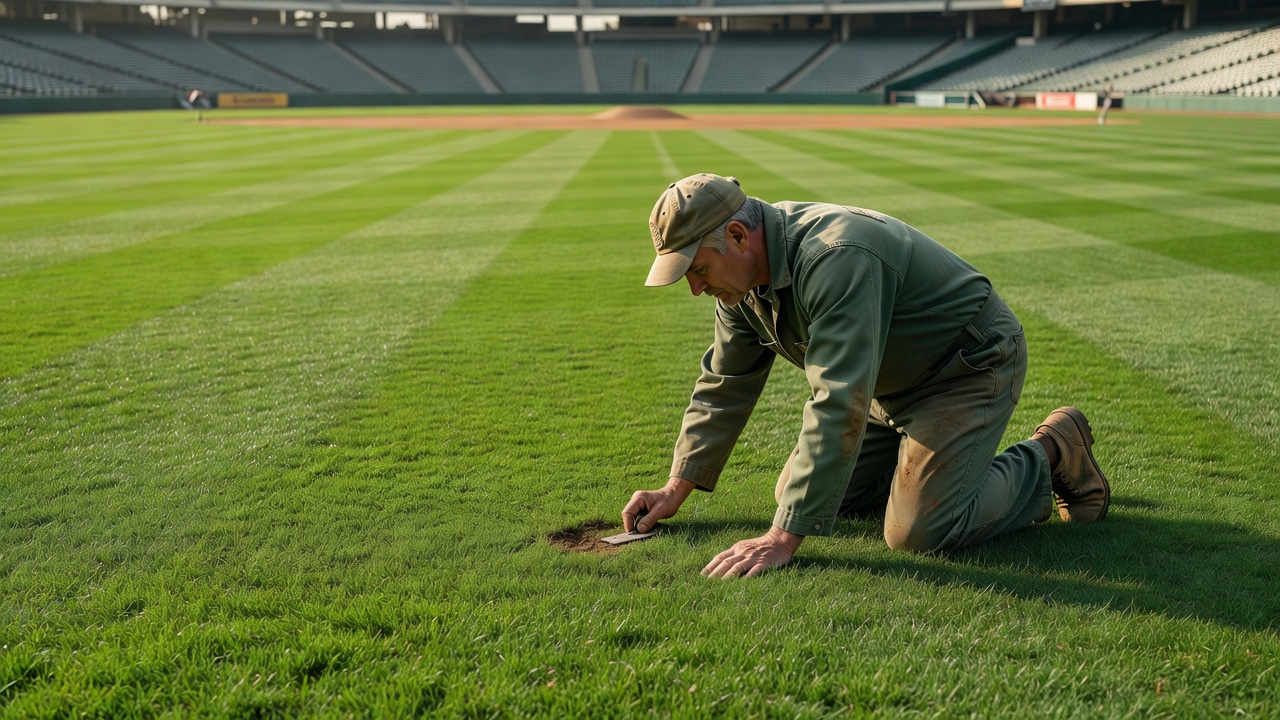
Inspect representative areas before changing a whole-field program.
Make mowing a controlled operation
Choose mowing height with the species, cultivar, season and available equipment in mind. Lower cutting can improve presentation and alter ball response, but it reduces the plant’s margin for stress when carried beyond its tolerance. Avoid abrupt reductions. The familiar one-third leaf-removal rule is a useful planning principle, not permission to ignore weak growth, heat or saturated footing.
Inspect cutting quality before chasing a stripe pattern. Dull or incorrectly adjusted reels tear leaves; an unsuitable setup can scalp uneven ground. Vary travel direction where practical, manage turns away from vulnerable edges, and prevent repeated wheel traffic from creating the same wear line. Remove debris before mowing and keep people clear of operating equipment.
Coordinate water, nutrition and cultivation
Use irrigation to manage the rootzone rather than follow an unchanging clock. Weather, rooting, soil texture and distribution uniformity influence how much water reaches usable depth. Hand watering can target a small dry area without saturating the rest of the field. Check sensors against physical samples and use consistent measurement depths; numbers from different instruments are not automatically comparable.
Build nutrition around testing, growth response and a realistic recovery objective. Excess nitrogen can create more clipping production without solving compaction, shade or poor drainage. Soil tests help guide nutrient decisions, while tissue analysis may answer a narrower diagnostic question. Follow local regulations and product labels for every fertilizer or plant-protection application, using properly qualified personnel where required.
Cultivation should address a documented limitation. Hollow-tine aeration removes material and creates temporary openings, while other techniques serve different purposes. Topdressing must be compatible with the existing profile; an unsuitable material or poorly timed application can create layering or disrupt play. Coordinate these operations with recovery conditions and the event calendar rather than scheduling them solely by habit.
Protect recovery and record the response
Rotate practice locations where operations allow, define equipment routes and repair wear before it becomes an expanding bare area. Seeding, sprigging or sod replacement depends on species, season and how soon the area must support use. A newly installed patch can look finished before it is adequately anchored.
After each intervention, repeat the original observations. Did cover improve? Did rooting extend? Did the same area still lose footing? Record what changed and what did not. This closes the loop between treatment and playing quality, allowing the next decision to rest on evidence rather than on appearance alone.