Build the plan around dependencies
Begin with the event schedule, weather outlook, field condition and available crew. Confirm practice access, broadcast activity, deliveries and any non-baseball use. A schedule is useful only when it acknowledges who else needs the surface. Identify the latest acceptable completion point for each task, then work backwards to protect the time needed for inspections and corrections.
Assign an owner to every critical operation and make escalation routes explicit. Who monitors changing weather? Who can close an access route? Who confirms the mound repair? Who reports unresolved concerns to venue management? These responsibilities should not depend on guessing which experienced person happens to be nearby.
Use a short briefing to identify hazards and conflicts. Discuss machinery zones, pedestrian access, hose crossings and any treatment restrictions. Check that operators are trained for their equipment. A rushed morning is not a reason to skip guards, personal protective equipment or a manufacturer’s pre-use inspection.
Inspect before committing machinery
Walk the field before sending out mowers or utility vehicles. Look for debris, displaced covers, animal damage, wet areas and new wear. Compare those findings with the previous shift’s log. A machine route that was acceptable yesterday may be unsuitable after overnight rainfall, irrigation or a leak.
Classify findings by consequence. An unstable footing area needs a different response from a cosmetic stripe issue. Protect the option to delay a nonessential task if it would compromise a higher-priority repair. Clearly mark or communicate temporary access restrictions so the rest of the crew does not unknowingly drive through the problem area.
| Stage | Must be known first | Handover evidence |
|---|---|---|
| Initial inspection | Weather, access, previous defects | Prioritized task list |
| Turf operations | Surface bearing condition | Cut quality and route check |
| Clay repair | Wear depth and material moisture | Restored shape and consolidation |
| Final skin finish | Repairs and moisture conditioning | Consistent finish and clean edges |
| Readiness review | Completed tasks and open concerns | Named handover recipient |
Keep work zones from undoing one another
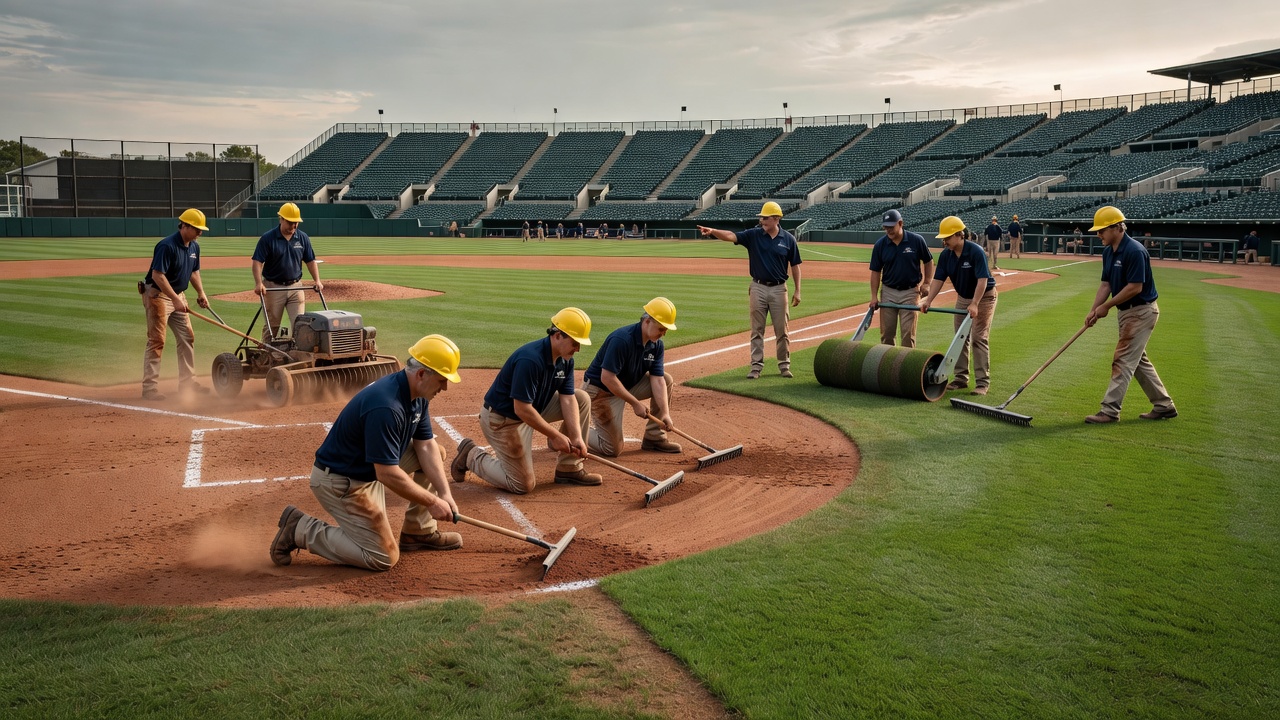
Sequence operations to limit rework. Complete material-moving tasks before final grooming. Keep vehicle traffic away from repaired clay and finished skin. Coordinate watering with mowing, painting and edge work so the crew does not create wet tracks or wash material into grass. Route equipment through designated access points and review those routes when conditions change.
Clean and stage tools where they can be reached without crossing completed work unnecessarily. Check fuel, charging, cutting adjustments and spare hand tools before the critical preparation window. Good staging reduces avoidable trips, but it must not obstruct emergency access or create unsecured equipment hazards.
Allow enough time for quality checks within the task, not only at the end. The mower operator should inspect the cut early. The repair crew should verify shape before covering clay. The person conditioning skin should compare moisture beyond the most visible area. Discovering a problem halfway through the operation is usually easier to manage than discovering it during the final walk.
Make weather response a practiced operation
Assign weather monitoring to a named person with a clear communication method. Follow the venue’s lightning, heat, wind and severe-weather procedures, including designated shelter and authority to suspend work. Public resources from the National Weather Service and Germany’s Deutscher Wetterdienst explain weather hazards, but an internet forecast does not replace a local emergency plan.
Practice cover deployment in suitable conditions. Confirm crew positions, clear routes, equipment readiness and the point at which wind makes the task unsafe under the venue’s procedure. Never make protecting the surface more important than protecting the people working on it. After a weather interruption, reassess the field rather than resuming the original task list automatically.
Hand over observations, not assumptions
The final walk should cover the actual playing and access areas, including transitions, repair locations and any previously flagged defects. Confirm that tools, hoses and loose materials have been removed. Record what was completed, what remains uncertain and who received the information. A signature or tick box is only useful if it represents a real inspection.
Authorized venue and competition personnel make the relevant readiness and play decisions. Grounds staff should report factual observations about surface stability, water, wear and unresolved hazards. Avoid reducing a complex assessment to “looks good,” especially when recent weather has changed the profile below a dry-looking surface.
Close the loop after use
Inspect damage while the pattern of play is still fresh. Repair concentrated wear, protect vulnerable areas and note unusual divots or recurring locations. Clean equipment according to its instructions, secure materials and leave the next shift an intelligible record. Do not perform unnecessary heavy work simply because the field is empty if conditions make that work damaging.
Review which tasks took longer than expected and why. A recurring delay may indicate poor staging, inadequate equipment, unrealistic access arrangements or an underlying field defect. Improve the sequence using that evidence. Reliable operations develop through small, documented adjustments rather than a single perfect timetable.