Know which material you are working
The infield skin is an engineered playing surface whose behavior depends on particle sizes, moisture, compaction and depth. Sand contributes a granular framework; silt and clay influence binding and moisture response. The balance must suit the venue’s climate, maintenance capacity and intended level of play. A recipe copied from another stadium may behave differently under your water supply, weather and daily workload.
Keep records of the installed mix and all subsequent additions. Separate bulk infield material from surface conditioners and from the higher-clay products used in concentrated wear areas. They serve different purposes. Adding a visible top layer can improve short-term handling without correcting a poor underlying mix, a low spot or an inappropriate profile depth.
Condition moisture through the working layer
A skin that is too dry may become loose, dusty or hard in ways that affect footing and ball response. A skin that is too wet can deform, smear and lose stability. The objective is an appropriate, reasonably uniform working condition, not maximum dryness. Judge the material at depth as well as at the surface, using repeatable field observations informed by the installed mix.
Plan watering around weather, wind, available time and the material’s ability to absorb water. A light surface application immediately before play is not equivalent to conditioning a dry profile over a longer period. Avoid allowing hoses, equipment or concentrated runoff to disturb the grade. Coordinate irrigation so overspray from adjacent turf does not repeatedly wet the same skin edge.
Diagnostic row: a dark surface still feels loose underneath
Inspect the depth of wetting and material distribution. Surface color alone does not demonstrate uniform moisture or adequate consolidation through the working layer.
Preserve grades and protect transitions
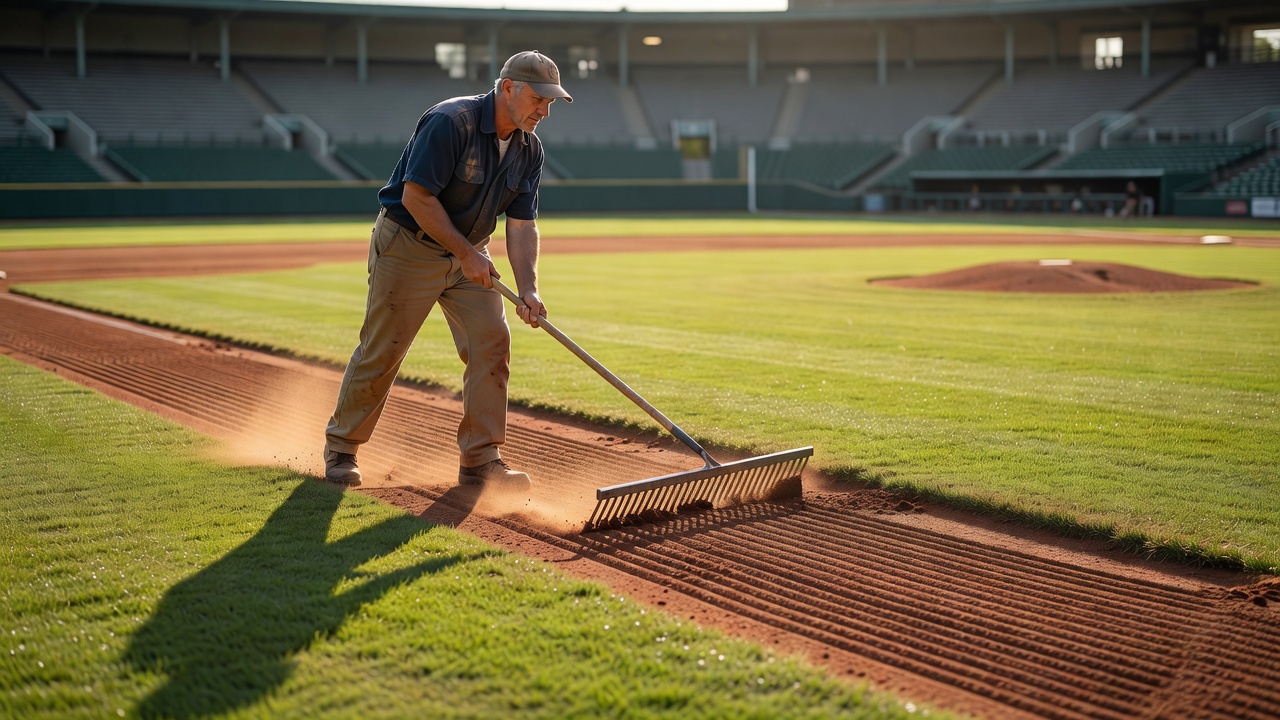
Surface grades direct water away from places where it should not collect. Repeated dragging can move material toward the perimeter and create a raised lip at the turf edge. That lip can impede runoff and produce an unpredictable transition for a ground ball. It also concentrates future work into a repair that might have been avoided with better daily technique.
Keep powered equipment and drags far enough from the grass to avoid carrying skin material into it; manage the final edge zone by hand. Vary drag patterns where appropriate and avoid aggressive turns that pile material in the same place. Clean displaced material from the grass using a method suited to conditions, without tearing crowns or pushing more material deeper into the canopy.
Investigate persistent puddles with grade checks rather than repeatedly covering them. Filling a depression without understanding surrounding elevations may simply move the problem. Significant regrading should be surveyed and planned. The playing surface must also remain compatible with the applicable competition rules and venue construction requirements.
Rebuild concentrated wear, then finish
The mound, landing area and batter’s boxes experience forces that ordinary loose skin material cannot always resist. Remove loose debris from a worn area and assess the sound material beneath it. Prepare the interface, use compatible repair clay at suitable moisture, and compact it in controlled lifts rather than covering a deep hole with a loose mound.
Restore the required geometry using appropriate templates or measurements. Major League Baseball’s Official Baseball Rules and the NCAA Baseball Rules are real references for their respective competitions, but maintenance staff must confirm which rules apply at their venue. Do not assume a professional specification automatically governs every youth or community field.
Only after repairs and moisture conditioning should the final grooming pass establish the desired finish. A light finish cannot rescue unstable material underneath. Cover vulnerable clay areas when appropriate, using covers and anchoring methods approved for the venue and weather conditions.
A drag is a finishing tool, not a grading survey
A mat can redistribute loose surface material and improve presentation. It cannot tell you whether the intended elevations remain correct. Choose the attachment, depth and travel pattern for the task, and follow the equipment manufacturer’s operating instructions.
Respond to rain without damaging the profile
When rain arrives, protect people first and follow the venue’s weather and lightning procedures. Tarp deployment requires training, enough crew and clear communication; wind can turn a cover into a serious hazard. Do not improvise a deployment plan while conditions are already deteriorating.
After rain, assess standing water, stability and the underlying profile before moving equipment onto the skin. Work that smears wet material or leaves wheel ruts can prolong recovery. Absorbent products may address limited surface moisture but cannot restore grades or make a saturated field safe by themselves. Record their use and account for accumulated additions in future material management.
The final readiness decision belongs to the authorized venue and competition personnel. Give them clear observations about footing, deformation, transitions and unresolved areas rather than a promise based only on the absence of visible puddles.